

Tenant, multi-site
Demand lands, we check the cap, you see whether to query. The query letter is a one-liner: 'cap Y3, demand exceeds by X%'.
1-line
query letter
We pull the cap, the basis and the applicable years, then watch every demand against them.
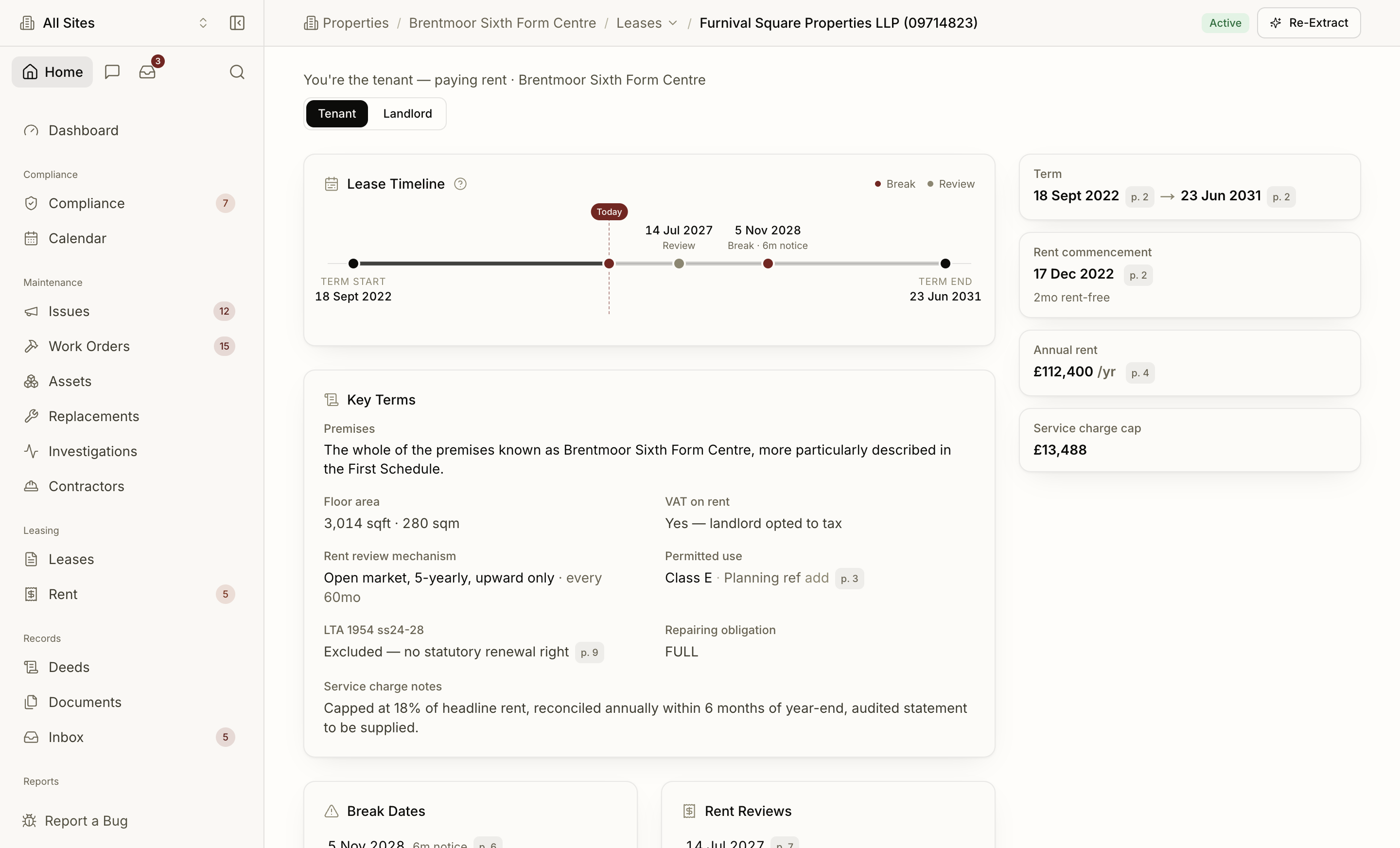
Service-charge demands have a contractual reconciliation window. Late reconciliation is a tenant lever; we surface the deadline before the landlord misses it.
Actuals frozen. Landlord has the contractual reconciliation window from this date.
Itemised lines uploaded against the cap. Drift vs prior year computed.
Reconciled demand sent. Tenant team sees the cap check the same day the demand lands.
Missed window flags on the dashboard. The tenant team now has a contractual point to query.
Demand uploaded, cap checked, variance recorded, dispute (if any) attached. The full thread sits in the audit log; the next reconciliation starts with the baseline.
Numeric cap pulled from the clause, with the indexation basis (CPI, RPI, fixed %) tagged for portfolio analytics.
Caps often apply only to specific years (Y1-3, then open). The applicable-years window extracted so the cap isn't applied where it doesn't.
Compare actual demand vs cap. Within 5% of cap: flag. Over cap: red. Tenant team sees the breach before they have to argue it.
The annual reconciliation should fall in a specific window. Late reconciliation is a tenant lever; we flag the missed window.
Upload the demand; itemised lines stored against the cap. Future demands have a baseline for variance analysis.
Tenant: 'is this fair?'. Landlord: 'am I within the cap?'. Same data, two dashboards.
Service-charge disputes are the most common landlord/tenant friction. The cap clause is the most-cited evidence. Have it ready.
Demand lands, we check the cap, you see whether to query. The query letter is a one-liner: 'cap Y3, demand exceeds by X%'.
Reconciliation dates per lease are different. Our pipeline view scheduled the reconciliation work so demands go out compliantly.
Academies often have low caps with strict indexation. Variance alerts go to the trust's finance director, not just estates.
Shopping-centre service charges with large caps. Itemised line-level storage surfaces the categories driving year-on-year drift.
14-day Pro trial. No card. Compliance tier from £199/mo. Light users free at every tier.